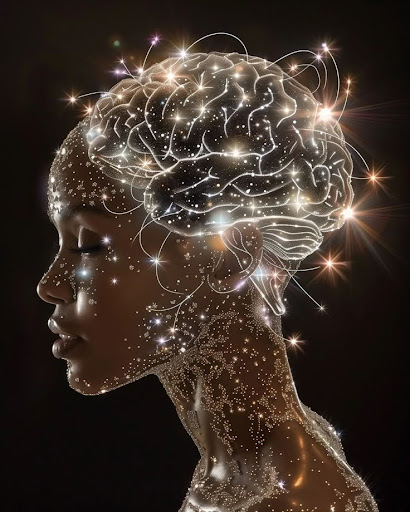
Most of us have heard of the game Among Us. Players must complete their tasks while trying to find the imposter, who is trying to kill everyone on board. While this game seems far from reality, what if I told you there was an imposter in your brain? An imposter who, like in Among Us, is destructive and can be the leading cause of your downfall.
Growing up in the Bronx with a single mother and brother, a girl felt like a fraud and that she did not deserve the accomplishments she made. As she said in a speech, “I have spent my years since Princeton, while at law school and in my various professional jobs, not feeling completely a part of the worlds I inhabit. I am always looking over my shoulder, wondering if I measure up.” “She” is Sonia Sotomayor, the first Hispanic American justice to serve on the supreme court. Countless successful people have experienced what Sotomayor describes, indicating that feelings of self-doubt do not discriminate. What all of these incredible people have in common is a feeling known as imposter syndrome, and more than 80% of the population experience it at some point in their life.
While you may think these geniuses and celebrities are miles above you, you may have more in common with them than you think.
Imposter syndrome is a psychological trick your brain plays to doubt your skills and accomplishments, and believe deep down that you are a fraud.
And what happens when you tell a person you suffer from this?
You need more confidence.
Like that will fix it.
Just focus on your accomplishments.
Don’t you think I’ve already tried that?
While this advice may come from a good place at heart, you need to get to the root cause of why you have imposter syndrome and remind yourself that that feeling is normal.
Why do people feel imposter syndrome?
Now that we have established- hopefully- that you are not the only one who has this lingering feeling, let us get to the root cause of why people have imposter syndrome. Imposter syndrome is a vicious cycle of gaining accomplishments but believing you don’t deserve them. Various factors, including societal and familial pressures, prejudice, and the workplace environment. Imposter syndrome is especially prevalent in underrepresented students. This prevalence is due to biases, especially systemic biases, and microaggressions– brief actions or comments that target marginalized groups. These microaggressions build up and can cause one to doubt themselves. Furthermore, lack of representation causes an individual to feel like they need to fit in. When their identity is not represented, the feeling of not fitting in– which correlates to imposter syndrome– is intensified. This is another reason why imposter syndrome impacts underrepresented identities at a greater level.
Imposter Syndrome at Berkeley
In a 2019 study, it was found that up to 82% of people may face imposter syndrome at some point in their lives. Imposter syndrome is especially prevalent in college. Students are constantly surrounded by peers and assume their academic work does not align with their grades. Dr. Sahar Yousef, a Cognitive Neuroscientist at UC Berkeley, says “We’re seeing imposter syndrome and burnout start to speak to each other in ways that are of concern, but it also makes sense.” UC Berkeley is among the most academically rigorous universities in the world. With over 45,000 students who were at the top of their class in high school, one can feel that they are not worthy of attending this school or will not be able to keep up academically.
Neuroplasticity and Imposter Syndrome
Despite this natural instinct to feel like you are not enough, there are many resources to combat this feeling. First, there are holistic treatments such as positive affirmations, building self-trust, celebrating your successes, and accepting that perfection is not possible.
What is interesting, though, is how technology is trying to treat this feeling. To address this field, we need to know the biological mechanisms of imposter syndrome. Imposter syndrome is linked to lower levels of serotonin and dopamine which lead to a negative mood and loss of motivation in people, respectively. The combination of having lower levels of both serotonin and dopamine creates a “domino-like” effect in people, impacting their performance, communication, and leadership skills. Now that we know the neurobiological perspective of imposter syndrome, how can we create technology that addresses these changes in neurotransmitters? Well, this ties in with neuroplasticity.
Neuroplasticity is the ability to create new neural grooves in our brain around habits, thoughts, and the words we speak. You have the power to change your brain at the chemical, structural, and functional levels. Many companies and research universities are currently developing innovative devices that engineer neuroplasticity, specifically in the brain and spinal cord. While there is no specific neurotechnology that addresses imposter syndrome, there are different technologies that address other phenomena and can be applied to combatting imposter syndrome in the future. For example, the Targeted Neuroplasticity Training (TNT) program provides accelerated military training through non-invasive neurotechnology that elevates neurological signaling, thus improving cognitive skills.
Along with this, NeuroString, a soft sensor for monamine neurotransmitters, has a high potential to manage imposter syndrome. Neurostring uses fast-scan cyclic voltammetry, a method that rapidly changes the voltage applied to a probe that reduces and oxidizes a target neurotransmitter. This technique generates a neurotransmitter-specific current. Transition-metal nanoparticles are created using laser carbonization enabling the sensor to analyze the neurochemistry of monamine neurotransmitters such as dopamine and serotonin.
Imposter syndrome doesn’t discriminate. The feeling of self-doubt and incompetence, despite all you have achieved, is a destructive force. While awareness about imposter syndrome has increased, there is more progress to be made towards removing the stigma. Though neurotechnology such as Neurostring requires further development before being released, will we see it being used in the future to treat imposter syndrome? And one day, will imposter syndrome be recognized as an official disorder by the Diagnostic and Statistical Manual of Mental Disorders instead of being swept under the rug as a feeling we all have to go through?
Categories: Blog
Website by Morweb.org
Copyright 2021