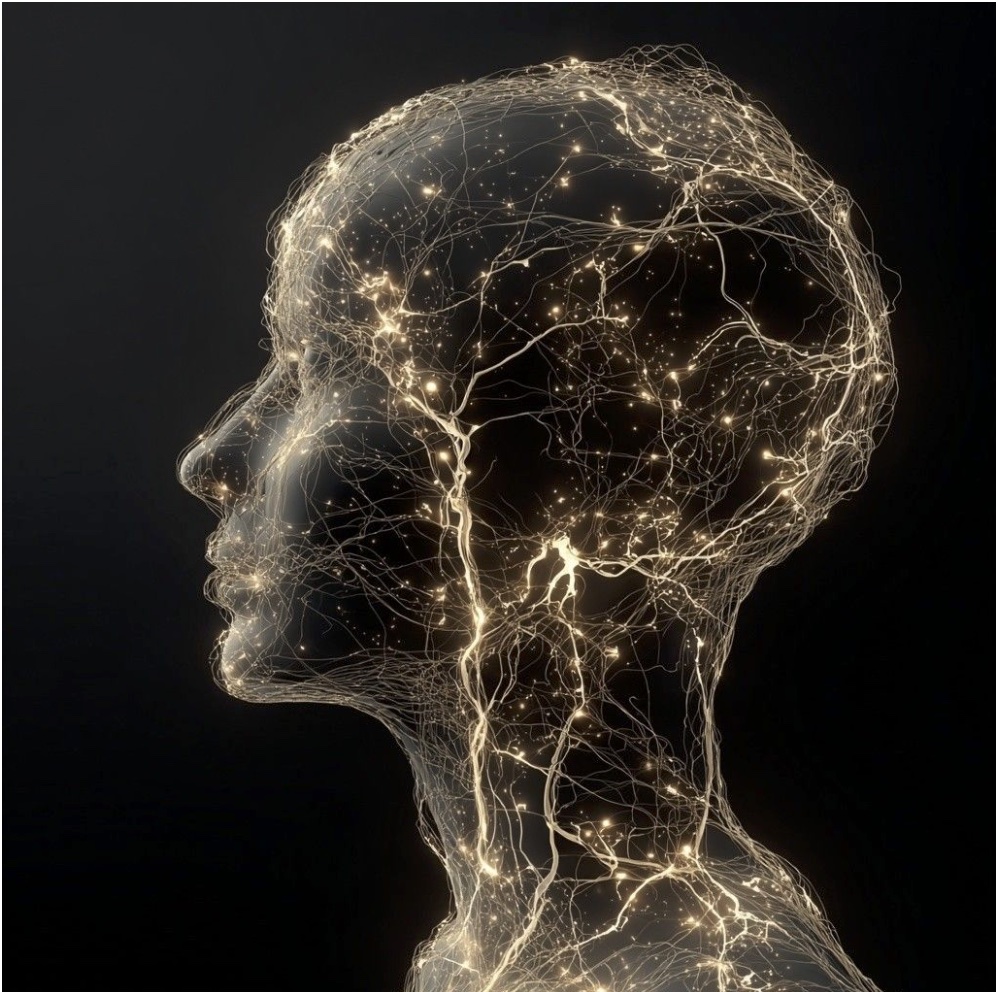
When I chose to major in neuroscience, I wanted to understand the brain. But, on a more personal level, I wanted to understand my brain.
After developing chronic pain, I spent years wondering why I was still hurting. Why did the pain continue when there was no obvious injury to heal? Why could something I felt so deeply be so difficult for others to understand?
Then I started learning about neuroscience.
For the first time, I was sitting in a classroom learning about concepts that I could immediately connect to my own life. The brain was no longer just something I studied for an exam. It was the reason I was fascinated by my own experience.
Two concepts, in particular, changed the way I understood chronic pain: central sensitization and neuroplasticity.
Central sensitization occurs when the brain and spinal cord become increasingly sensitive to sensory signals, amplifying sensations like pain and touch.
Normally, pain protects us. It tells us when something is wrong and helps us respond to danger. But sometimes, the nervous system can become hypersensitive, continuing to amplify pain signals even when there is no longer an immediate threat.
Learning about this helped me understand something I had struggled with for years: pain can be real even when there is no visible injury causing it.
My pain was not imaginary. It was not something I was making up or simply thinking myself into. My nervous system was processing signals differently.
There was something strangely comforting about having the science to explain what I had experienced for so long.
The second concept that fascinated me was neuroplasticity: the brain's ability to change and reorganize itself throughout our lives.
One way this happens is through synaptic plasticity. When neural pathways are repeatedly activated, the connections between neurons can become stronger. As the saying goes, "neurons that fire together, wire together."
This can help explain chronic pain. When pain pathways are repeatedly activated, the nervous system can become increasingly sensitive. In a sense, the brain can learn the pain response, creating a cycle that becomes difficult to break.
If the brain can change in ways that contribute to chronic pain, it can also change in response to new experiences, treatments, and habits. The nervous system is not necessarily stuck in one state forever.
Learning about neuroplasticity changed the way I thought about my own future. I began to see my brain not as something permanently broken, but as something capable of adapting and changing.
Studying neuroscience did not make my pain disappear. But it gave me something I had been searching for since my symptoms began: understanding.
For years, I wanted to know why I hurt. Neuroscience taught me that pain is far more complex than I ever imagined. It is not simply a signal from an injured body part: it is an experience shaped by the brain and nervous system.
Most importantly, it taught me that the brain can change. And for someone living with chronic pain, that possibility means everything.
Categories: Blog
Website by Morweb.org
Copyright 2021